






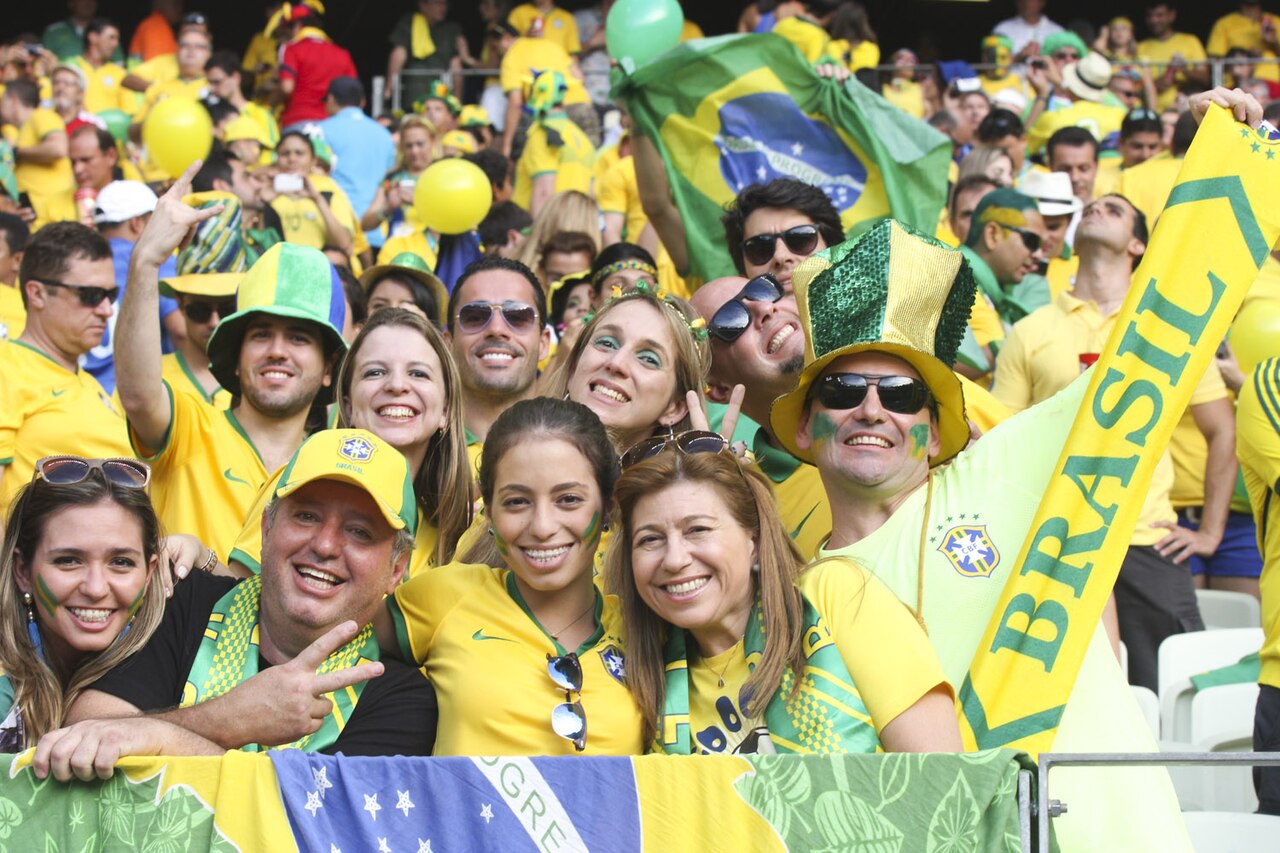
The 10th edition of the FIFA Women's World Cup is set to take place in Brazil from June 24 to July 25, 2027, marking a historic moment as the second and final tournament to feature 32 teams before the competition expands to 48 nations in 2031. Brazil has automatically secured their spot as hosts, while defending champions Spain—who claimed their first World Cup title in 2023 by defeating England—will look to retain their crown in South America. The tournament will utilize eight venues across major Brazilian cities, all of which previously hosted matches during the men's World Cup in 2014, ensuring world-class infrastructure for women's football's biggest stage.
The path to Brazil has been complex, particularly in Europe, where a three-tier qualifying system based on the 2025 UEFA Women's Nations League determined advancement. Fifty-three European nations competed across three leagues: 16 teams each in Leagues A and B, and 21 in League C. Four direct qualification spots were awarded to the League A group winners—Denmark, France, Spain, and Germany—cementing their places alongside hosts Brazil. The remaining European teams, including England and the Republic of Ireland, now face a two-round playoff system scheduled for October through December 2026, where they will compete for an additional three European spots. The first round features two distinct paths: Path 1 pits League A runners-up and third-place finishers against League C playoff qualifiers, while Path 2 matches League A bottom-dwellers and League B winners against League B's second and third-placed teams, all playing in two-legged ties.
Beyond Europe, the global qualifying landscape reveals a diverse field emerging across confederations. In Asia, six slots have been secured by Australia, China, South Korea, Japan, Philippines, and North Korea. Africa has confirmed Algeria, Morocco, Cameroon, and Malawi for their four available places, while South America's three spots (excluding host Brazil) are filled by Argentina and Colombia. North America, Central America, and the Caribbean has yet to confirm any qualified teams for their four slots, as has Oceania's single berth—though New Zealand has already advanced. Additionally, an inter-confederation playoff tournament will award three final qualification places, with seven nations—Uzbekistan, Chinese Taipei, Ghana, South Africa, Venezuela, Ecuador, and Papua New Guinea—currently guaranteed entry into that decisive round.
The eight Brazilian host cities—Belo Horizonte, Brasília, Fortaleza, Porto Alegre, Recife, Rio de Janeiro, Salvador, and São Paulo—will showcase the tournament across iconic stadiums steeped in football history. The Maracanã in Rio de Janeiro stands as the centerpiece venue, boasting a capacity of 78,838 and having previously hosted both the 1950 and 2014 men's World Cup finals, as well as the 2016 women's Olympic football tournament final. Alongside the Maracanã, seven other world-class facilities will host matches: Estádio Mineirão in Belo Horizonte, Estádio Nacional in Brasília, Arena Castelão in Fortaleza, Estádio Beira-Rio in Porto Alegre, Arena de Pernambuco in Recife, Arena Fonte Nova in Salvador, and Arena Itaquera in São Paulo. This comprehensive infrastructure ensures that the 2027 tournament will deliver a world-class experience across Brazil's major metropolitan regions.
Explore our daily Poisson probability distributions, Expected Goals (xG) models, and comprehensive tactical fixture previews.