







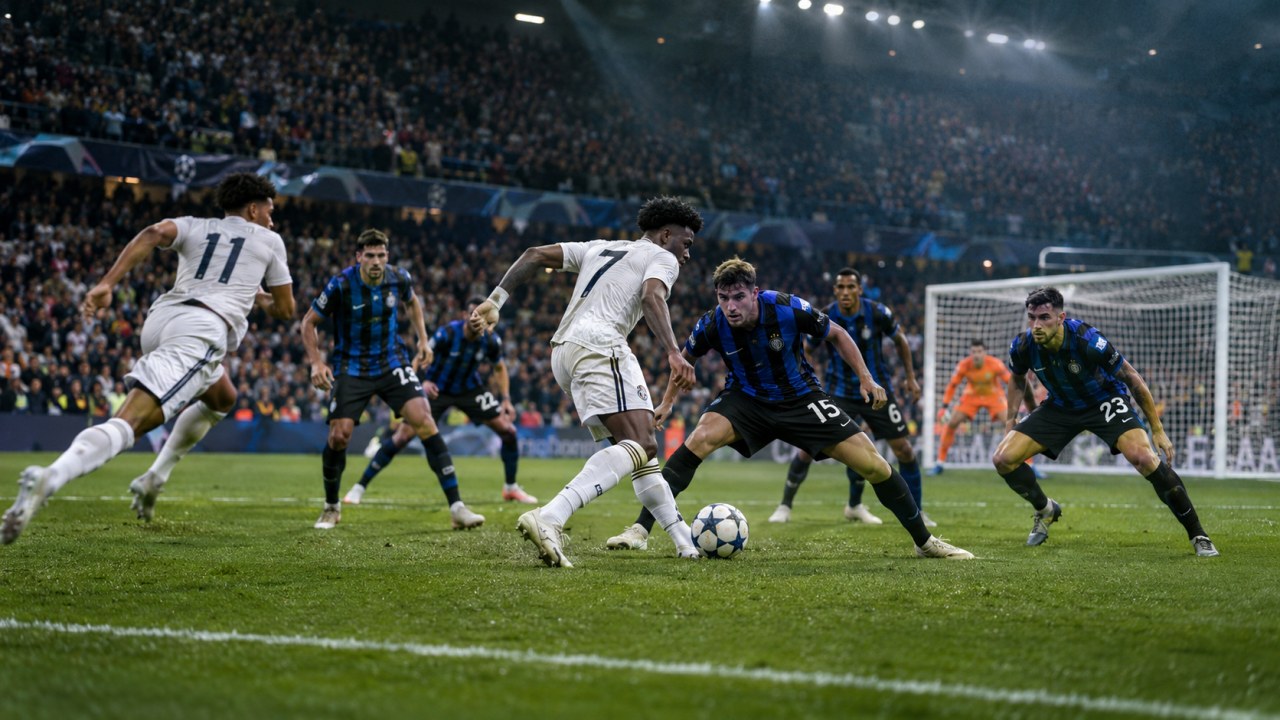
In contemporary top-flight football, the greatest tactical dichotomy is no longer possession vs. direct play, but rather the confrontation between dominant possession structures and disciplined, deep-sitting low blocks. When an underdog concedes 75% possession and parks ten outfield players within thirty yards of their own goal, conventional attacking patterns break down. Understanding how defensive teams construct this barrier—and how elite managers dismantle it—provides crucial insight into expected goals, match tempos, and scoring frequencies.
1. Anatomy of the Modern Low Block
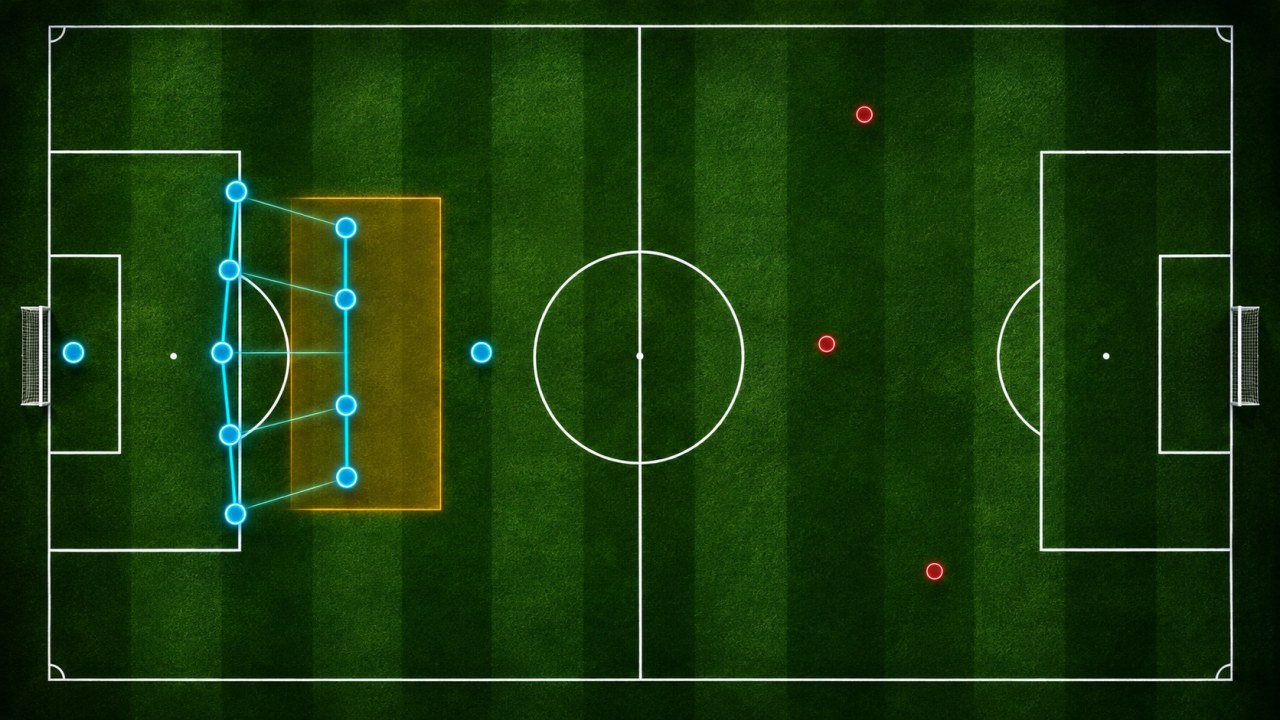
A low block is not merely "clearing the ball and hoping for the best." In elite leagues such as the English Premier League, Italian Serie A, and Spanish La Liga, low blocks are mathematically calibrated systems of spatial denial.
Typically arranged in a 5-4-1 or ultra-compact 4-4-2, the primary defensive objective is controlling the central corridor and denying access to Zone 14 (the critical 18-yard rectangle directly in front of the penalty area). By keeping the vertical distance between the defensive backline and the midfield line under 15 meters, the defending side completely eliminates passing lanes between the lines.
2. How Elite Tactical Systems Breach the Block
When facing an entrenched low block, circulating the ball passively along the perimeter of the box is a recipe for frustration. Elite managerial setups deploy three primary tactical solutions:
- Half-Space Overloads and Underlapping Runs: Rather than crossing from wide positions (where central center-backs hold aerial superiority), attacking full-backs and attacking midfielders make penetrating runs into the half-spaces between the opposition center-back and full-back, creating cutback angles toward the penalty spot.
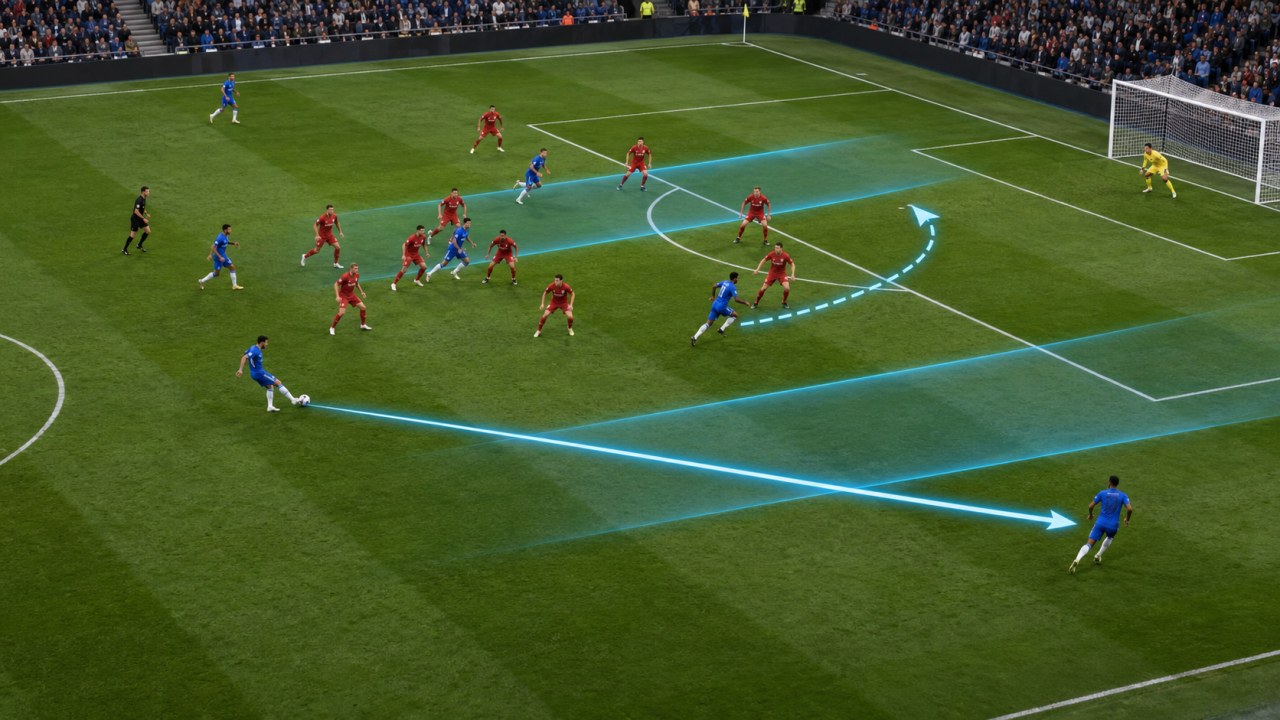
- Opposite-Side Diagonal Switches: By rapidly circulating possession on one flank to draw the entire defensive block across the pitch, a rapid cross-field diagonal pass to an isolated winger on the opposite touchline creates a 1v1 attacking duel before the defensive unit can slide across.
- Third-Man Decoy Combinations: Strikers intentionally drop into midfield to drag a center-back out of line, while an inverted winger sprints into the vacated space behind.
3. The Statistical Impact on Goal Frequencies
From an analytical perspective, matches characterized by deep low blocks exhibit distinct mathematical traits:
- Compressed First-Half Expected Goals: Over 68% of low-block encounters feature under 1.0 expected goals prior to the 45th minute, as physical energy and defensive discipline remain peak.
- Extreme Concentration on Under 3.5 & Under 4.5 Markets: Because the defending side generates almost zero sustained counter-attacking threat (often recording less than 0.35 total xG across 90 minutes), the match's entire scoring burden falls on the favorite. Even when the favorite breaks through, scorelines such as 1-0, 2-0, or 2-1 dominate the final result.
- Set-Piece Dependency: Over 35% of goals scored in low-block fixtures originate from corners or indirect free kicks rather than open-play combinations, making set-piece xG a decisive forecasting metric.
Recognizing defensive structural setups allows sports intelligence models to identify fixtures with suppressed goal ceilings, providing valuable quantitative context for matchday analysis.
Explore our daily Poisson probability distributions, Expected Goals (xG) models, and comprehensive tactical fixture previews.