






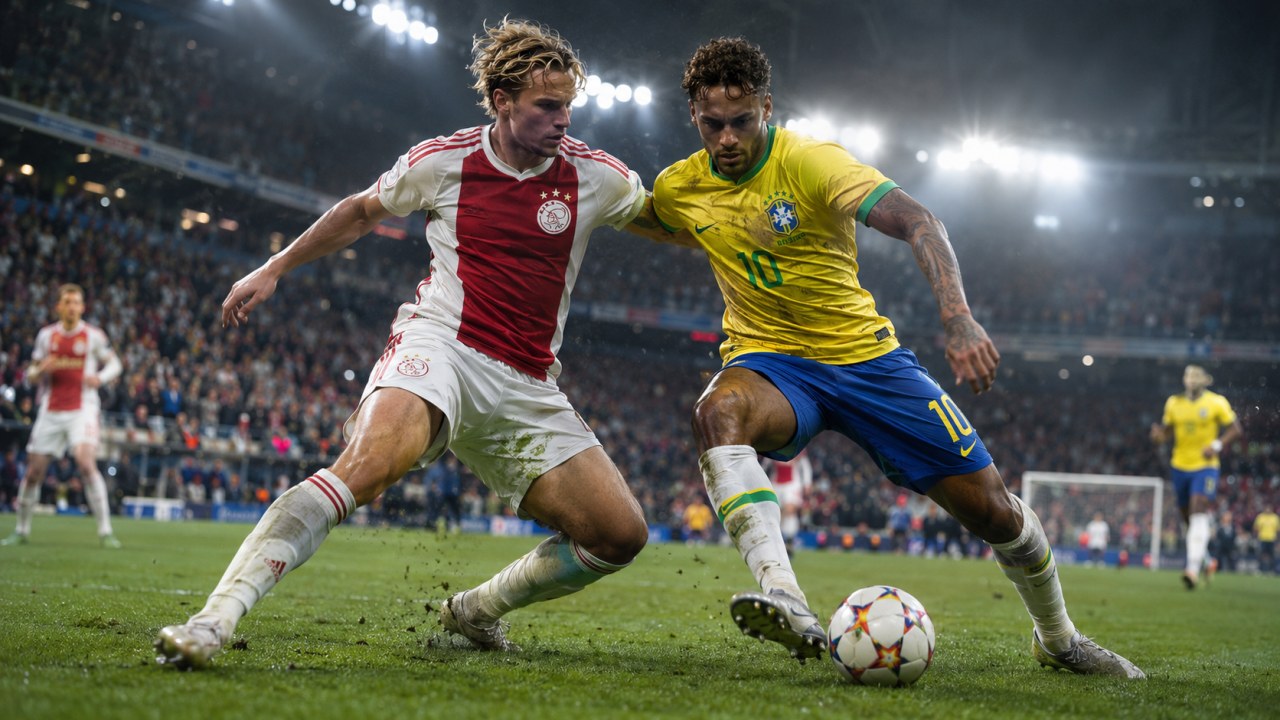
In June 2023, Israel's Under-20 football team offered a fleeting vision of national unity. Their "science fiction" run, capped by a quarter-final victory over global powerhouses Brazil at the U20 World Cup, captivated the country. The semi-final against Uruguay drew a 23% viewing share, the most-watched event on Israeli television, as "Everybody in Israel fell in love with these kids," noted journalist Ido Rakovsky. A powerful symbol emerged when Israeli Arab player Anan Khalaili used 'Am Yisrael' ('People of Israel') after a stoppage-time winner, making "real the claim that football can really bring people together." Yet, a mere four months later, the devastating Hamas attack on October 7th, killing approximately 1,200 and taking 251 hostages, abruptly shattered this fragile optimism.
This U20 squad represented a true "golden generation," finishing third at the 2023 World Cup and runners-up at the 2022 U19 Euros. Key players like Anan Khalaili (Crystal Palace), Oscar Gloukh (Ajax's number 10), Roy Revivo (Elche), and Stav Lemkin (Twente) are making significant European moves, with others impressing in MLS. Coach Ofir Haim was crucial in fostering unity within his diverse squad, famously stating, "We unite everybody, and I wish the country were as united as this team." This echoed football's historical role as a social unifier, which historian Dr. Omer Einav described as "the only common language" during the mandate period.
Despite football's unifying potential, its path in Israel has always been challenging. Israeli Arabs, comprising 35% of elite national players, faced historical controversies like Rifaat Turk (1976) and Bibars Natcho (2018). Post-October 7th, however, the landscape dramatically worsened. Matan Segal, former director of Kick It Out Israel, observed a disturbing surge in anti-Arab racism. He noted, "Before 7 October, people generally respected the Arab players... After 7 October though, we saw an increase in racist remarks," citing "terrible songs" like 'Let's kill all Arabs' and 'There are no schools in Gaza because there are no children left.'
The events of October 7th have fundamentally altered the context for this promising generation and Israeli football's unifying power. The brief summer of 2023, when Haim's U20 side offered a glimpse of unity and co-existence, now feels tragically distant. As the war continues and divisions deepen, the question looms: can the potential of these "golden generation" footballers truly be realised, both on the pitch and as a force for social harmony? The virulent racism now surfacing threatens the inclusivity the U20 team embodied, leaving the sport's capacity to bridge divides facing unprecedented challenges.
Explore our daily Poisson probability distributions, Expected Goals (xG) models, and comprehensive tactical fixture previews.